

Garth Jennings began his creative career as one half of director-producer duo Hammer & Tongs, responsible for some of the most memorable pop videos of the turn of the millennium. Since then, he’s gone on to helm the film adaptation of a beloved sci-fi series (The Hitchhiker’s Guide to the Galaxy), a cult classic of independent British cinema (Son of Rambow), and two smash-hit animated musicals (Sing, Sing 2).
Now, his joyful new documentary/concert film Pulp: What Do You Do for an Encore? finds him teaming up with a band he first worked with in 1997 to tell their story on the big screen. It’s received acclaim all over, including a rave review from Joyzine. As part of a roundtable interview alongside journalists from WARP Magazine and Billboard Colombia, we caught up with Garth to learn more about how he pieced together the ultimate cinematic record of pop heroes Pulp.
‘I suppose it was the perfect time,’ says Garth on why he chose to make this film now, ‘because it was amazing that they were coming back and also that they weren’t just coming back to just play old songs. They were sort of reborn in terms of creativity. They were making a new record. It feels like a whole rebirth.
Not just a legacy tour, but a whole start of something new and wonderful. And the idea of telling the story of how you go from being a kid with this dream to being in your sixties, still as excited about the future as you were when you were a kid, that’s a really nice story to tell and it feels like the perfect time to have told it. I didn’t know that’s what I was going to get, but that’s what happened. You follow your instincts on these things and I think it was amazing to be around for this moment.’
To speak to Garth is to immediately feel that Pulp got exactly the right man for the job. All excited gestures and beaming smiles, he radiates fanboy enthusiasm and generosity of spirit in equal measure. ‘I didn’t just want to make a fan film,’ he says. ‘I am a fan and I want people like me who love the band to love the movie, but it’s more important that it reaches beyond that, like their music always did for me. Great pop music should be for everybody, and I want this film to be something that if you’ve never even heard their music or even know who they are, if you watched it, you would fall in love with them by the end of the movie. That’s my number one goal. And everything else is under that.
I’m basically doing the same thing I’ve been doing since I was a kid. I haven’t stopped. It’s always just been putting on a show. It’s weird how you just keep repeating yourself. But I’m obsessed with that energy that comes from making something happen, something magical for an audience. Even in Son of Rambow, it’s like [the characters] were making a little film and they wanted to show it to people and something magical was going to happen in front of the camera. And I just fell in love with music and film when I was very, very small, like five, six years old. And ever since I fell in love with those two things, I’ve been trying to find ways to put them together that people will feel.
You can connect to people through music and films. It was crazy when those Sing movies came out. It was really powerful how far we could go with it, and every day I still get messages all the time about people that discovered this music through those films. I would love that to happen with the Pulp film, that it would be the same kind of delight. In the way we’ve staged it but also the way we’ve told the story it should be infectious. I love that.’

With Pulp: What Do You Do for an Encore? telling the story of Jarvis Cocker simultaneously rising to fame and learning to live in the real world, you could call it a coming-of-age film, a pie which Garth has already got a finger in thanks to Son of Rambow. But how do you structure a story like that when you have to fold in concert footage too? Necessity, he explains, was the mother of invention.
‘Time and pressure force you to make decisions. They’re partly creative but they’re also partly like, “I have three minutes. How are we going to do this in three minutes? We can’t tell the whole thing literally, so how can we suggest or get close to it?” And I have two superpowers. One is a lot of archive material that is beautiful, funny, lovely, real. And secondly, I have Jarvis’s voiceover. So, with those two things I can kind of do anything. He could say something that would get me over that narrative bump.
With a movie like the Sing movies or any other movies I’ve done, you write a script and you make exactly what you write. With this, it’s like playing and finding ways. You have to be more flexible with how you do it so that there’s less of a script and more of an approach. It’s more playful.
We didn’t want it to be a documentary where I’d be filming Jarvis and he’d be saying, “Oh, when I was twelve, I was a boy”. I wanted him to be telling you the story like he’s leaning into your ear and going, “Okay, so when this happened and this happened…” so you really feel it’s more intimate and it’s much more him. It’s much more like it comes from the band and not from me.’
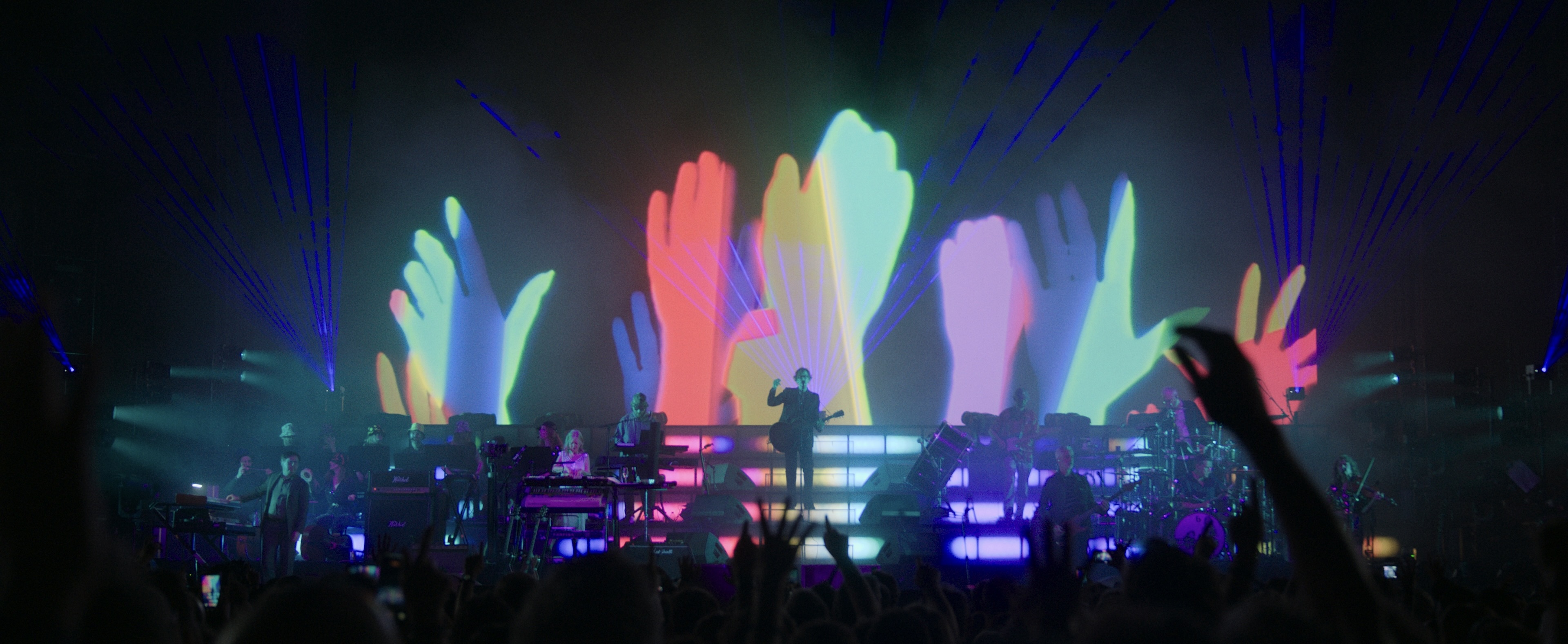
That said, Garth brings a wealth of original flourishes to the film; for instance, the exercise book in which the young Jarvis Cocker dreamt up Pulp’s future is transformed into an ever-growing animated timeline of the band’s members. ‘Sometimes you have to bring the story to life because you don’t have anything. All I had was in that case a book with some drawings in it, and so it made sense to have the drawings come to life like it would in your head as a kid.
There are other places, for instance, like when he fell out of the window and he had to go to hospital. We have no film of that and we have no footage, so we had great fun finding archive footage of people in hospitals. So sometimes the ideas just come from having a problem that you need to fix. Like, “we have nothing. We have nothing that goes here. What can we do?” There’s a moment when he’s talking about Barry White, and we can’t license the music. It was too expensive. So we’ll just have a photograph of Barry White and we’ll have him talking about it. And hopefully you don’t notice that I didn’t put any Barry White music in because we couldn’t afford it.
There are so many ideas that come from solving a problem, and I love that. Some ideas are just pure artistic expression, and some are creative solutions to problems because you don’t have the money or you don’t have the footage. And I think that’s kind of the Pulp aesthetic too, which is make the best with what you’ve got.’
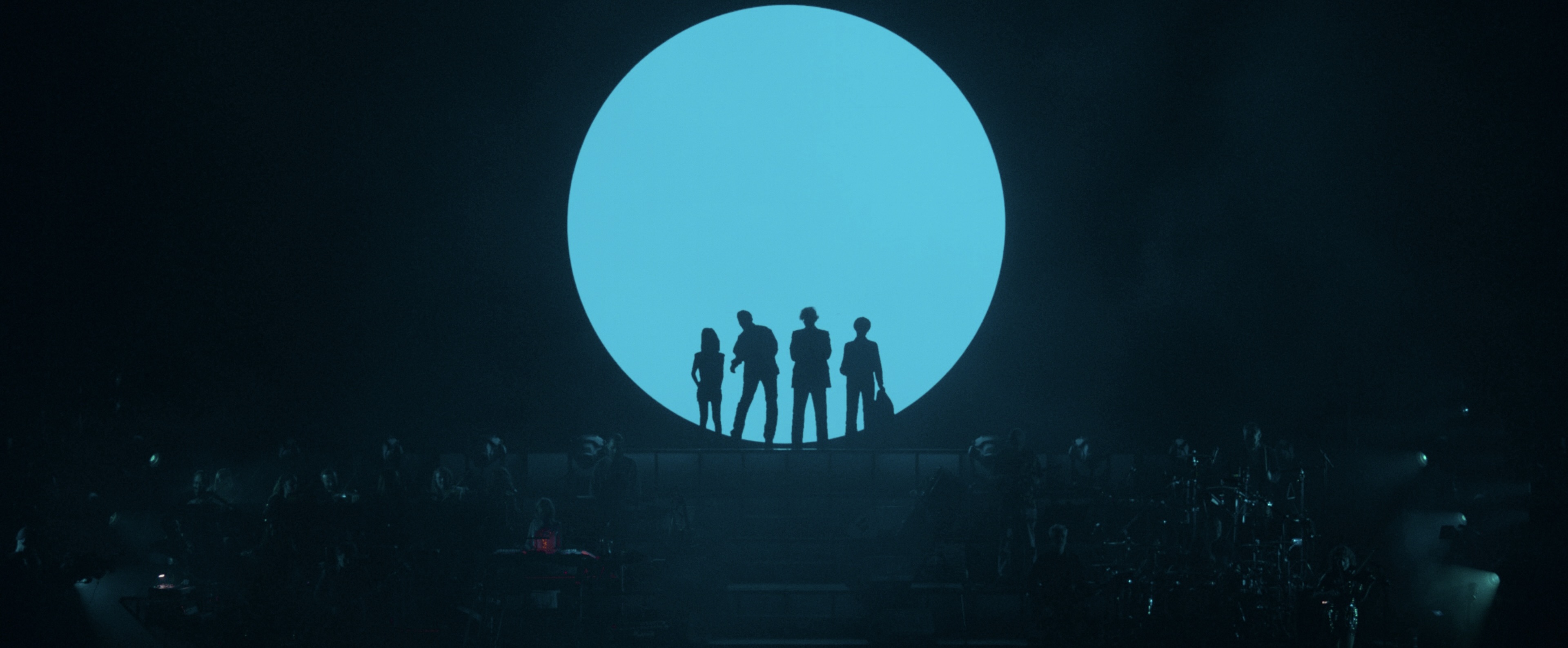
Pulp: What Do You Do for an Encore? is a particularly satisfying watch as it is both concert film and documentary. Was there ever a time when Garth considered making it one or the other? ‘I think that actually it was always going to be both, because it felt so important for you to watch that concert and understand what had led to this moment, so you weren’t just seeing them perform nice songs. By the time you get to the end, by the time you get to “Common People”, you feel like you’ve seen everything that led to this moment and it has even more meaning than if it was just the end of a concert. It has more resonance.
So then when they do the last song, when they come back and they sing “A Sunset”, it feels really sweet and it’s like a family moment. It’s like a Christmas song or something. And then then they wave goodbye and that’s it. But you’re trying to make this music matter and that’s why the two have to work together.’
This film is packed with so many fun facts and tantalising clips that even the most diehard fan will likely come away having learned something new, but Garth’s favourite revelation from working on this film is a personal one. ‘I think it’s amazing that I love the band even more because sometimes when you make something, you end up hating it. Do you know what I mean? Because you’re like, “I never want to hear it again”.
But it’s the opposite for me. I love them even more. And I didn’t realise just how great they were as musicians until I saw the rehearsals. I always knew they were great, but when you see somebody in rehearsal, they’re raw. They’re just in their sweatshirts, and they would go from having a coffee and going, “oh, yeah. Hi. Okay,” to “five, six, seven, eight, bang!” And it was incredible and perfect. Like absolutely perfect. So I feel like I always knew they were great, but I have a deeper appreciation for just how musically great they are now. It’s ridiculous.’
As the interview comes to a close, I think of all the young, music-loving filmmakers just like Garth setting up cameras in their bedroom, perhaps plotting out their futures in exercise books as the youthful Jarvis did. Does he have any advice for them?
‘The best advice is always specific. When you know someone, you could say, “Hey, you know what you should do?” So the only advice I can give here is general, but I would say the one thing that’s helped me choose what to do, without wanting to sound corny, is love. Like if you love something, almost to the point where it’s slightly unreasonable – you love something – then follow that.
If you don’t love it, if you don’t really, really love it, you will eventually come unstuck. It will fall apart on some level. Maybe you’ll finish it. Maybe it’ll be good, but it won’t be great because you didn’t love it. And I feel like if you love something very much and you have that curiosity and that burning desire to do it, follow that. Do that and you’ll get there. Because that feeling you have can be shared by others. And then you have a great shot at making something good.’
In other words, you’ve got to have love. Fancy that, some pop lyrics do speak the truth after all. Now, remind me again who came up with that one…?
Pulp: What Do You Do for an Encore? is due to premiere worldwide on MUBI from 25th September
Pulp socials:
Website | Facebook | Instagram | Threads | Bandcamp
Article by Poppy Bristow
Photo of Garth Jennings by Ezra Petronio
Stills from Pulp: What Do You Do for an Encore? by Garth Jennings
Keep up to date with all new content on Joyzine via
Facebook | Bluesky | Instagram | Mailing List