

It’s the modern Cinderella story. A shy, awkward beanpole of a boy, preferring the fantasies of Doctor Who to the realities of human contact, is transformed by the power of pop music and grows into a self-assured icon of oppositional outsider cool.
Cult hero Robyn Hitchcock tells a similar tale in his memoir 1967, but as it turns out he is far from alone. According to new concert film/documentary hybrid Pulp: What Do You Do for an Encore?, that simple synopsis describes the rise of Jarvis Cocker and Pulp with perhaps even greater accuracy.
For a band who invite such love as Pulp, director Garth Jennings (Sing, Son of Rambow, The Hitchhiker’s Guide to the Galaxy) is the ideal person to assemble their defining document. A devoted fan of the band and friend of Cocker since they worked together on the videos for ‘Help the Aged’ and ‘A Little Soul’ in the 90s, he returned in 2023 (and again in 2025) to direct their reunion shows.
Importantly, he recognises Cocker as a kindred spirit; someone who, since childhood, has nurtured a passion for pop culture in all its forms. In warmly whispered voiceover, our frontman sets out the ‘Pulp aesthetic’: ‘Sifting through second-hand items to tell a brand-new story, which is pretty much the definition of the creative act’.
Jennings brings this mission statement to life in typically vivid style. Between spectacular concert footage from the band’s 2025 shows, he pieces together ‘commercial breaks’ from a vast variety of archival clips, folding in everything from vintage Milk Tray adverts to Cocker’s popping up on a pirate-themed segment of Live & Kicking.
It’s an appositely eclectic backdrop for Cocker’s narration. True to the band’s resourceful spirit, he quotes extensively from his 2022 memoir Good Pop, Bad Pop, but there is a perhaps surprising theme which ties together this new telling of his coming-of-age story – television.
In one particularly entertaining archive interview, Cocker’s nan discloses that her grandson “lived in a bit of a fantasy world” from an early age, and his own account does nothing to dispel this idea. He refers back to the small screen time and time again (Star Trek and Doctor Who are particular favourites), his younger self using it to relate to the real world almost constantly. At times, he comes off as a cross between the title character of Billy Liar and Peter Sellers’ intensely naïve gardener from the film Being There.
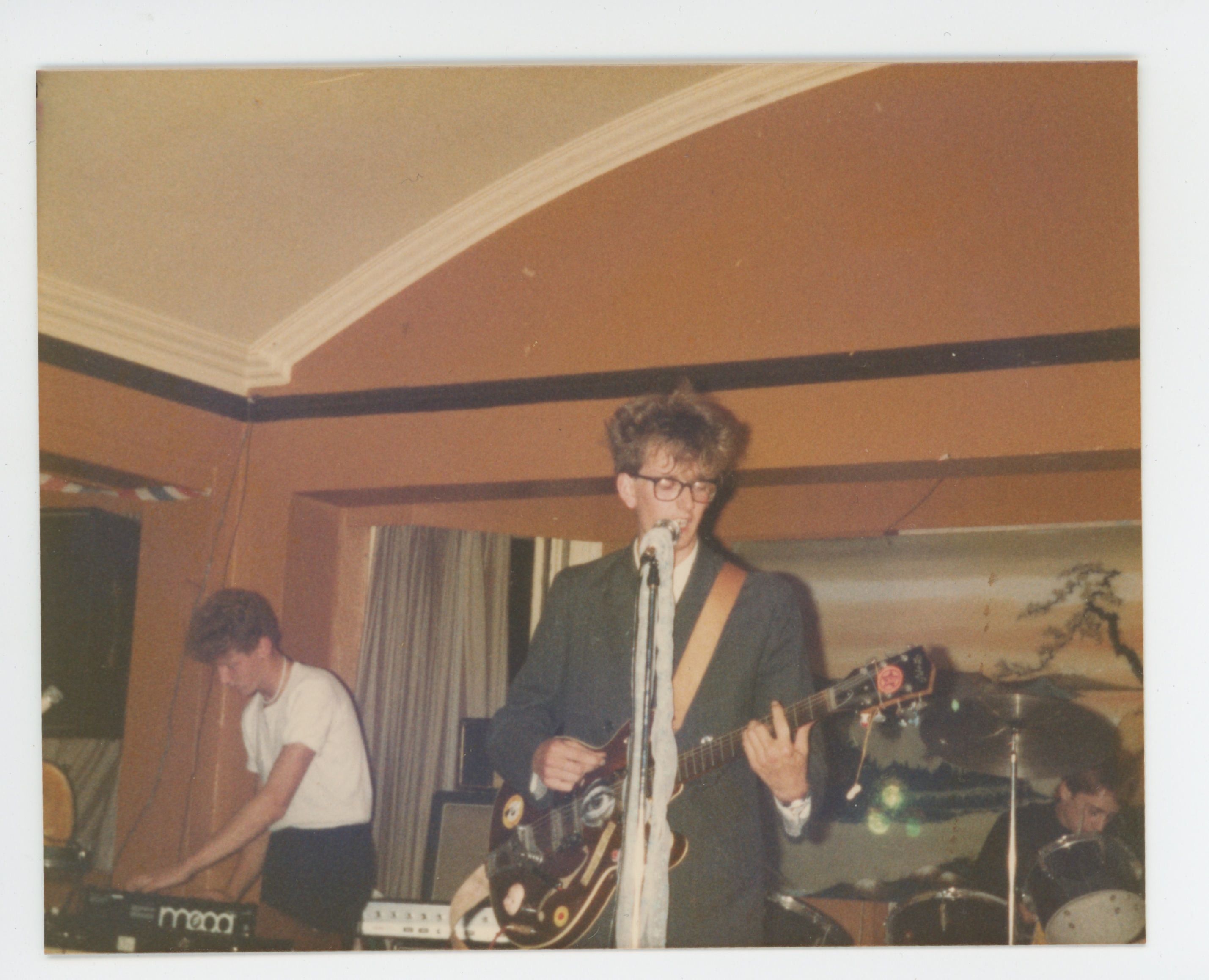
The obsession persists as he rises to national fame, even electing to mime on Top of the Pops because that was how he’d seen it done on TV growing up. ‘I personally tried to reach the world I had seen inside the TV set as a child,’ he tells us, in his characteristic would-you-like-to-know-a-secret manner. ‘If I accepted enough invitations I might be allowed to live there permanently’.
Fortunately for Cocker, the camera has always loved him back, and the staging of the very first song we see performed in What Do You Do for an Encore? gives a cheeky nod to just how much, in the public’s eyes, he is Pulp. The silhouettes of the band rise up against the backdrop of a huge blue moon, but it’s not until Cocker breaks into song that the trick reveals itself. The figures surrounding him are only Different Class-style cutouts, the real band members already playing their hearts out on the stage below.
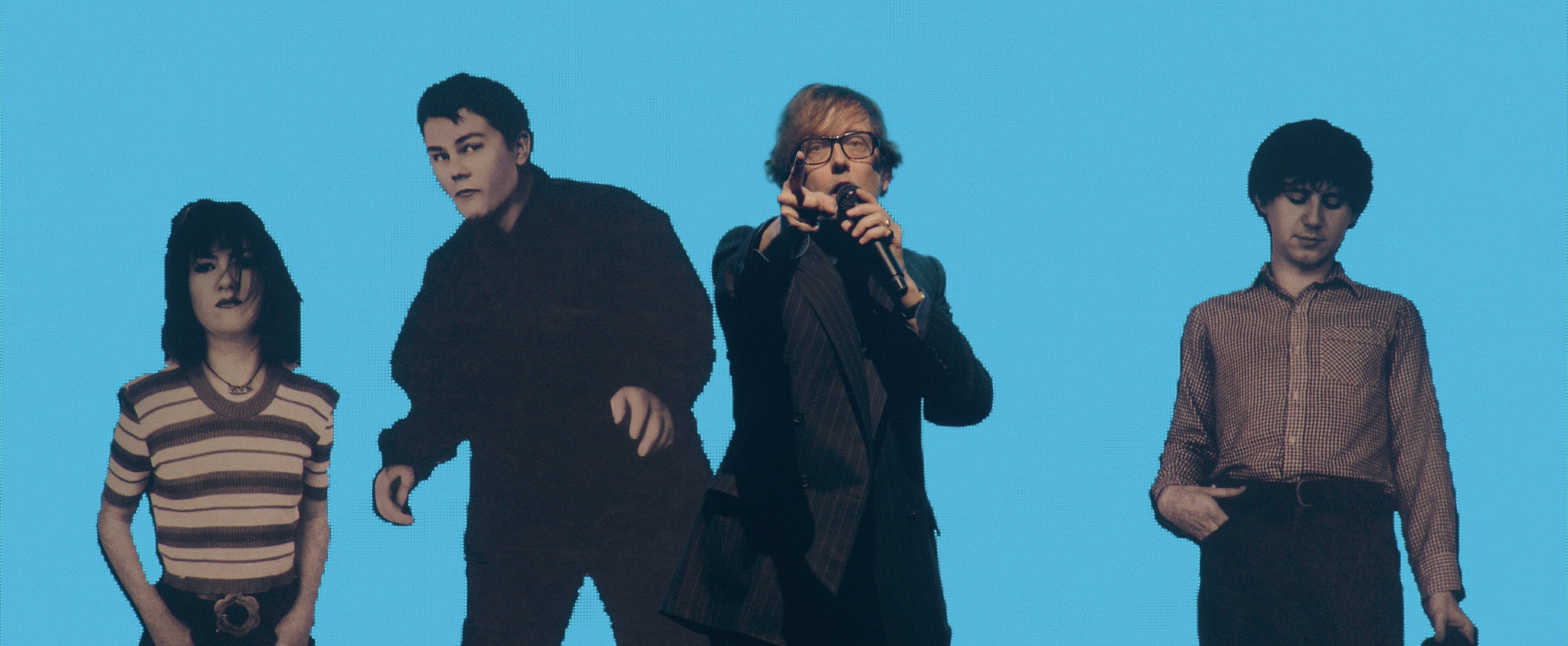
Jennings allows Candida Doyle, Nick Banks, and Mark Webber their turns in the spotlight too, but most moving of all is the film’s tribute to the late Steve Mackey, who Cocker describes as his closest friend in the band. Over a lovely, stripped-back live rendition of ‘Something Changed’, we cut to a montage of Cocker and Mackey on stage together. To see these images collected anew is to feel the palpable warmth of their friendship and the ache of just how much Mackey is missed.
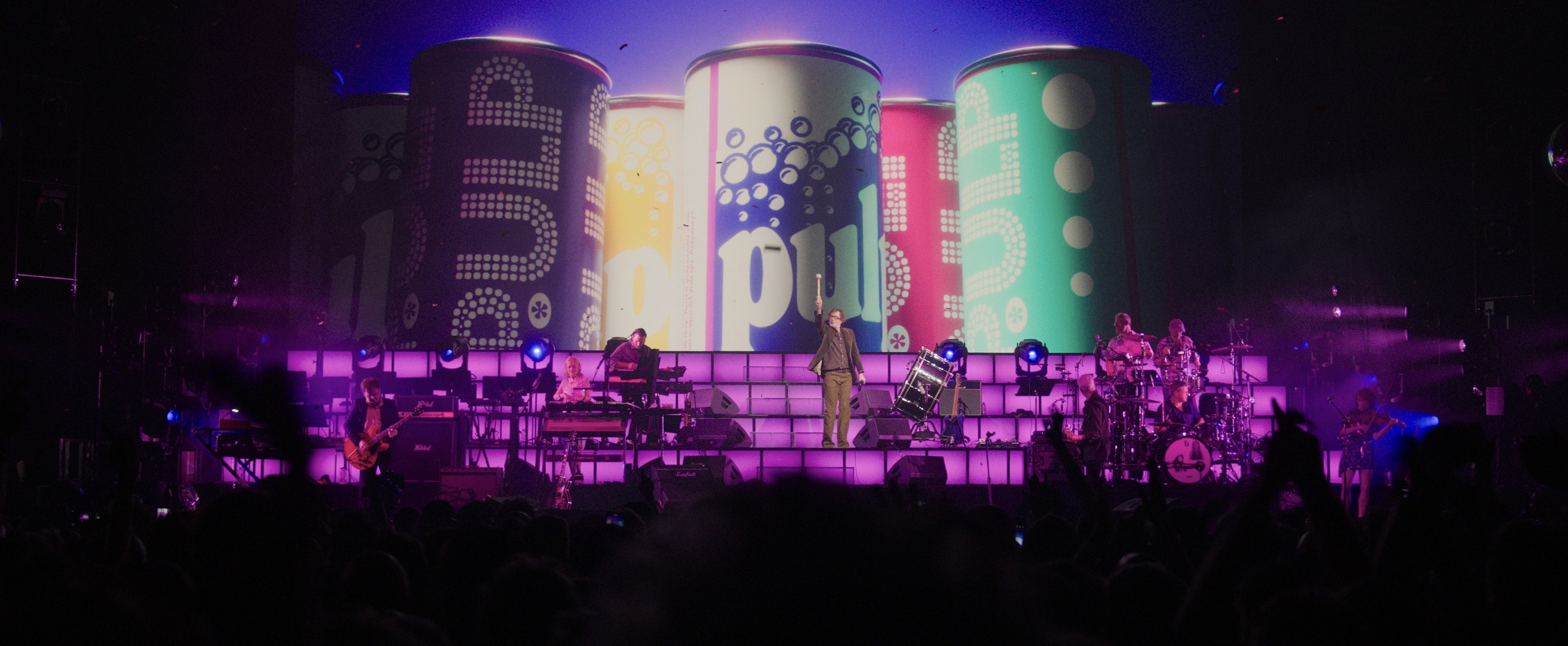
After all, What Do You Do for an Encore? is a concert film at its core, and every time Jennings segues like a documentarian DJ from story to song, Cocker commands ownership of the stage with astonishing charisma. Between leaping around, stalking up the steps, sweeping his arm in a great arc to wallop a gigantic kettle drum, or throwing shapes in silhouette, he acts out the lyrics to ‘Disco 2000’ and ‘Grown Ups’ like the seasoned storyteller he is.
But none of it ever feels jokey or artificial. When he holds up the award Pulp won for scaling the album charts only a month before the show, he can’t resist sticking it to the patronising press for pigeonholing them as an ageing legacy act. Cocker knows and loathes condescension, and if you’re anything like him, chances are you’ll be cheering along with the crowd.
It’s not all uplift, though. ‘F.E.E.L.I.N.G.C.A.L.L.E.D.L.O.V.E’ has its improbable Barry White influences given wings by a show-stopping string section and a smart bit of contextual editing. A driving live arrangement transmogrifies the song into an industrial soundscape as Cocker bends acrobatically backwards and lets out a lung-busting howl of ‘oh yeah’. Is there anyone alive who can fill that phrase with as much torment as he can?
Then there’s the song which gives the film its name. Beefed up for a stadium environment, the already ominous ‘This Is Hardcore’ takes on the cinematic grandeur of Led Zeppelin’s ‘Kashmir’ by way of Johns Barry and Williams. A lit chandelier illuminates Cocker’s moves after some louche stage business with an armchair and a coffee cup provides the perfect theatrical prelude.
To see these brilliant, incisive, humane songs sandwiched into this flick-book history is to remember exactly why we fell for Pulp in the first place. “Real life is not televised,”c Cocker concludes, but this is hardly a bitter pill when the transportative power of music is a part of reality too. ‘It’s real time travel, much better than Doctor Who.’
Cocker probably wouldn’t fancy being called a Time Lord; he’s not got much truck with aristocracy. Perhaps it’s enough that Pulp: What Do You Do for an Encore? shows there was a time when a peculiar young band from Sheffield, seeing beauty in the things that others discarded, could go on to win the hearts of misfits the world over. As a certain TV show once put it, ‘it all started out as a mild curiosity in the junkyard, and now it’s turned out to be quite a great spirit of adventure, don’t you think?’
Pulp: What Do You Do for an Encore? is in UK cinemas on 18th September only and due to premiere worldwide on MUBI from 25th September
Pulp socials:
Website | Facebook | Instagram | Threads | Bandcamp
Review by Poppy Bristow
Stills from Pulp: What Do You Do for an Encore? by Garth Jennings
Keep up to date with all new content on Joyzine via
Facebook | Bluesky | Instagram | Mailing List
1 comment